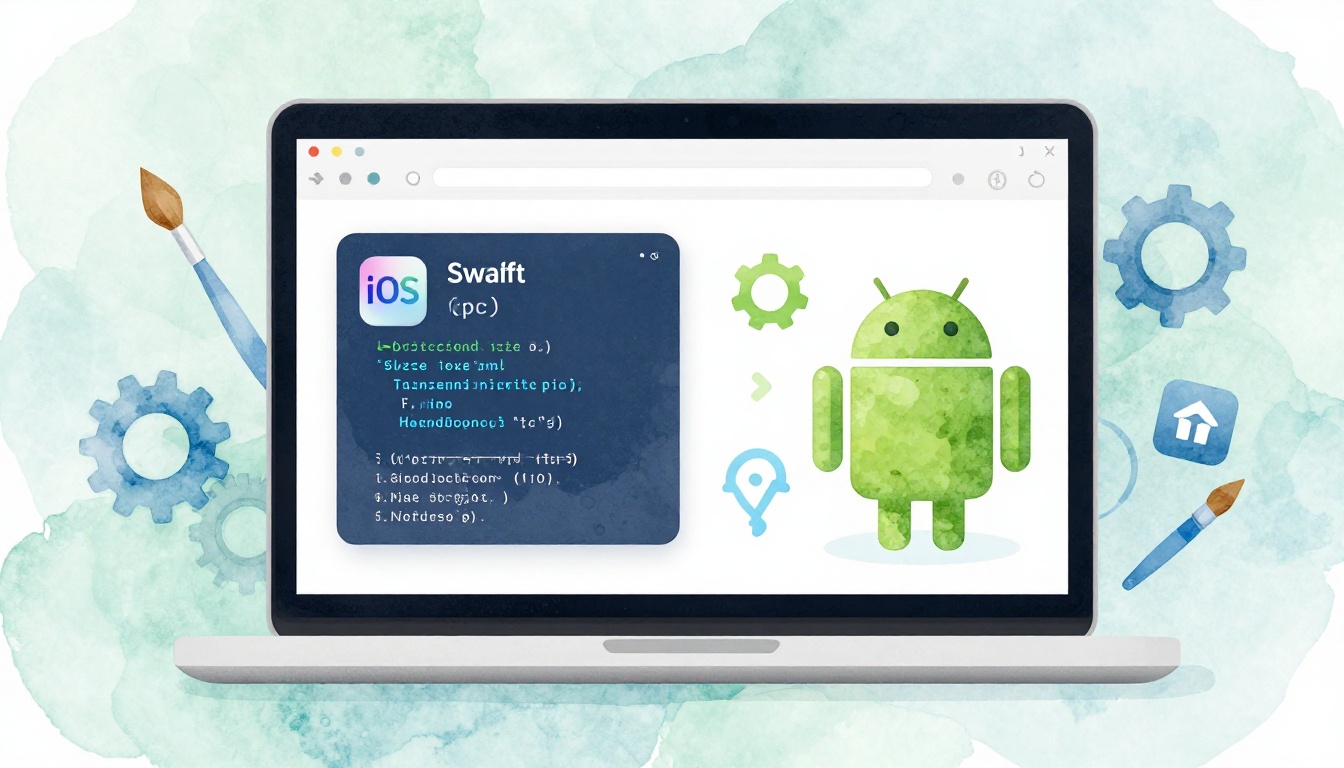
Picture this. You’re a developer with a killer app idea, but the clock ticks down on your deadline. Do you code separate apps for iOS and Android, or use one codebase that works everywhere? Native development means platform-specific tools like Swift for iOS and Kotlin for Android. Cross-platform lets you write once with frameworks such as Flutter or React Native.
Both paths have strengths. Native shines in speed and polish. Cross-platform saves time and money. This post breaks down native vs. cross-platform pros, cons, and key factors. You’ll get a clear checklist to pick what’s best for your project. Let’s start with why native often feels like the premium choice.
What Makes Native Development the Gold Standard for Top Performance
Native apps use the phone’s own languages and tools. They run directly on the hardware. That’s why they feel so smooth.
Take gaming apps. They need instant response times. Native handles that without hiccups. Apps load 30-50% faster than cross-platform ones, based on recent benchmarks.
However, you code twice. Once for iOS, once for Android. Costs double. Timelines stretch out. Still, for high-end needs, native delivers.
Key Advantages That Set Native Apps Apart
Performance stands out first. No middle layers slow things down. Your app reacts in milliseconds.
Users notice the native look. Buttons and menus match what people expect on their device. That boosts satisfaction. Studies show native UIs keep users engaged longer.
Full hardware access seals the deal. Cameras, GPS, and sensors work at peak power. Think augmented reality features. They demand direct control.
Banking apps pick native for security. They tap into platform safeguards easily. In short, native fits apps where every detail counts. It’s like a custom suit. It fits perfectly from day one.
The Real Costs and Challenges of Going Native
Budgets hurt the most. A basic native app runs $100,000 or more. Cross-platform halves that to around $50,000.
Time adds up too. Dual codebases mean twice the work. Updates require fixes on both sides. Bugs slip through if teams miss sync.
You need specialists. iOS experts differ from Android ones. Hiring gets pricey for small teams.
Yet native pays off for big projects. Polished results attract users. If your app demands top speed, these costs make sense.
How Cross-Platform Development Delivers Faster Builds and Lower Costs
Cross-platform frameworks share one codebase. Flutter from Google renders custom UIs. React Native from Facebook bridges to native parts.
Development speeds up 30-50%. Costs drop by half. One team handles everything. Hot reload lets you see changes instantly.
By 2026, 70% of developers choose cross-platform. It’s popular for good reason. Simple apps thrive here.
Debugging poses issues, though. Errors span platforms. Performance lags 10-20% in heavy tasks. UI needs tweaks for full polish.
Standout Benefits for Time-Strapped Teams
Speed tops the list. Prototype in days, not weeks. Code reuse hits 80-90%. Change once, deploy everywhere.
Hiring proves easier. JavaScript skills abound. Web devs jump in fast.
Instagram switched to React Native. They scaled features quickly across platforms. Updates roll out consistent and smooth.
For startups, this means market entry sooner. You test ideas without breaking the bank.
Limitations You Can’t Ignore in Cross-Platform
Performance dips show in complex apps. Battery drains faster on intensive tasks.
Plugins add risk. Third-party code breaks with updates. Games suffer most. Graphics demand native power.
Debugging frustrates. Tools lack native depth. You tweak UIs per platform anyway.
Mitigate with strong frameworks. Pick mature ones like Flutter. Test early and often. Cross works best for standard apps.
Your Decision Checklist: 5 Factors to Weigh for the Best Fit
No choice fits all. Weigh these factors instead. Start with your budget and timeline.
Ask key questions. Does speed matter most? Target one platform? Your answers guide you.
Cross-platform rises to 60% market share in 2026. Trends favor it for most projects. Use this checklist to match your needs.
Budget, Timeline, and Team Readiness
MVPs love cross-platform. It cuts time and cash for quick launches. Native suits polished products with funding.
Calculate rough. Cross saves 40-60% upfront. Your team matters too. Web skills point to cross. Native pros demand specialists.
Example: A solo dev picks React Native. They ship faster alone.
Target Platforms and User Expectations
iOS users crave premium feel. Native delivers that polish. Android spans devices. Cross handles variety well.
Global apps favor cross. Reach billions without dual work. Check your audience data first.
App Complexity and Long-Term Plans
Simple CRUD apps go cross. Forms and lists work fine. Heavy apps need native. Video streaming or maps demand power.
Future updates tip to cross. One codebase simplifies changes. Scale with care on either path.
Real-World Proof: Apps That Thrived with Each Approach
Success stories prove the points. Big names chose wisely. Their results inspire.
TikTok went native for video feeds. Uber relies on it for maps. Both grew to billions of users.
Discord picked React Native. Alibaba chose Flutter. They launched fast worldwide.
Lessons tie to your checklist. Performance drove native picks. Speed fueled cross wins.
Native Victories in High-Stakes Apps
TikTok needs smooth scrolls. Native handles massive video loads. Users stick around because it flies.
Uber maps update in real time. GPS precision comes from direct access. Reliability built their empire.
These apps prove native excels under pressure.
Cross-Platform Hits That Scaled Fast
Discord grew chats globally with React Native. One team pushed updates quick.
Alibaba used Flutter for e-commerce. Cost savings let them expand features. Downloads soared post-launch.
Speed to market made the difference.
The right path boosts your odds. Native wins on performance. Cross-platform excels in efficiency. Run your project through the checklist. No perfect answer exists. Match your goals instead.
What fits your app? Comment your choice below. Talk to a dev team next. Share this if it helped. Pick smart, and watch your project succeed.